


Buy 3-MEO-PCP
$ 140.00 $ 2,900.00Price range: $ 140.00 through $ 2,900.00
3-MeO-PCP is a methoxy-substituted PCP analog with high NMDA receptor affinity used for research in dissociative pharmacology.
3-MeO-PCP (3-Methoxyphencyclidine) Product Description
Introduction
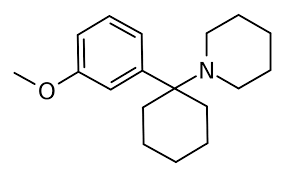
3-Methoxyphencyclidine (3-MeO-PCP) is a synthetic dissociative anesthetic and hallucinogen that belongs to the arylcyclohexylamine class, structurally related to phencyclidine (PCP). It is distinguished by a methoxy group substitution at the 3-position of the phenyl ring. 3-MeO-PCP has been sold and used as a designer drug and research chemical. It acts primarily as a potent NMDA receptor antagonist with additional serotonergic and sigma receptor interactions. It does not exhibit opioid activity or significant dopamine reuptake inhibition.
Chemical Properties and Specifications
Structural and Molecular Characteristics
| Attribute | Specification |
|---|---|
| Chemical Formula | C18H27NO |
| Molecular Weight | 273.41 g/mol |
| CAS Number | 72242-03-6 |
| IUPAC Name | 1-(1-(3-methoxyphenyl)cyclohexyl)piperidine |
| Synonyms | 3-MeO-PCP, 3-Methoxyphencyclidine |
Physical Properties and Purity Standards
-
Appearance: White crystalline powder or tablets.
-
Purity: Typically ≥ 97%, verified via chromatographic and spectrometric techniques.
-
Solubility: Soluble in water (salt form), ethanol, methanol, DMSO, and dimethylformamide (DMF).
-
Storage Recommendations: Store in airtight, light-protected containers, in cool, dry conditions, preferably refrigerated (2-8°C) to maintain stability.
Pharmacological Profile and Mechanism of Action
Proposed Mechanism of Action
3-MeO-PCP acts as a potent uncompetitive antagonist of the NMDA receptor at the dizocilpine (MK-801) binding site, with a Ki of approximately 20 nM, indicating higher affinity than PCP itself. It also binds to the serotonin transporter (Ki ~216 nM) and the sigma-1 receptor (42 nM). The compound does not bind significantly to dopamine or norepinephrine transporters or opioid receptors, disputing earlier claims about opioid activity. Its dissociative effects arise mainly through NMDA receptor antagonism with secondary receptor interactions influencing subjective experience.
Research Applications
3-MeO-PCP is employed in neuropharmacological and toxicological research to study NMDA receptor antagonism, receptor binding profiles, and behavioral effects. It is also used as a forensic analytical standard for detecting novel dissociative designer drugs. Research includes metabolism studies identifying numerous phase I and II metabolites in biological specimens.
Comparative Analysis with Related Compounds
Comparison to PCP and Other MeO Isomers
3-MeO-PCP demonstrates higher NMDA receptor affinity compared to PCP and other methoxy isomers such as 2-MeO-PCP and 4-MeO-PCP. This contributes to its enhanced potency and dissociative effects. Metabolism and pharmacokinetic profiles vary distinctly from related analogs, explaining differences in duration and subjective effects.
Advantages for Research
-
High NMDA receptor binding affinity facilitates investigation of dissociative mechanisms.
-
Purity and stability support reproducible pharmacological and toxicological studies.
-
Provides essential chemical standards for forensic detection of emerging psychoactive substances.
Safety and Handling Guidelines
Laboratory Safety
Wear gloves, lab coats, and eye protection. Handle in fume hoods or well-ventilated areas to minimize exposure.
Disposal and Environmental Considerations
Dispose of waste according to hazardous chemical protocols, avoiding environmental contamination.
Regulatory Status
3-MeO-PCP is a controlled substance in various countries, authorized only for licensed research.
Frequently Asked Questions (FAQs)
-
What receptors does 3-MeO-PCP bind to?
-
NMDA receptor antagonist, serotonin transporter, sigma-1 receptor.
-
Does 3-MeO-PCP have opioid activity?
-
No significant opioid receptor binding has been demonstrated.
-
How potent is 3-MeO-PCP compared to PCP?
-
It has higher affinity for NMDA receptors than PCP.
-
What are common solvents for 3-MeO-PCP?
-
Water (salt form), ethanol, methanol, DMSO, DMF.
-
Is 3-MeO-PCP legal?
-
It is regulated and restricted to authorized research use.
Conclusion
3-MeO-PCP is a potent dissociative NMDA receptor antagonist with additional serotonergic and sigma receptor activity. Its pharmacological profile and high purity make it valuable for neuroscience research and forensic pharmacology of designer dissociatives.
Reviews
There are no reviews yet.