

Buy John William Huffman – 210 (Buy JWH-210)
$ 24.95 $ 6,499.95Price range: $ 24.95 through $ 6,499.95
JWH-210 is a potent naphthoylindole cannabinoid receptor agonist used in research of synthetic cannabinoids and cannabinoid pharmacology.
JWH-210 Product Description
Introduction
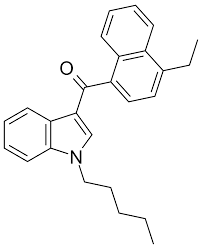
JWH-210 is a synthetic cannabinoid analgesic from the naphthoylindole family, discovered by chemist John W. Huffman. It is a potent agonist at both cannabinoid CB1 and CB2 receptors, exhibiting high binding affinity and strong cannabinoid-like effects. JWH-210 is widely used in scientific research to explore cannabinoid receptor function and synthetic cannabinoid pharmacology.
Chemical Properties and Specifications
Structural and Molecular Characteristics
-
Chemical Formula: C26H27NO
-
Molecular Weight: 369.5 g/mol
-
CAS Number: Not standardized (JWH compounds are research chemicals)
-
IUPAC Name: (4-Ethyl-1-naphthyl)-(1-pentylindol-3-yl)methanone
-
Synonyms: JWH-210
Physical Properties
-
Appearance: Off-white crystalline solid powder
-
Purity: Typically ≥98% research grade
-
Solubility: Soluble in organic solvents like ethanol and DMSO
-
Storage: Stable under normal laboratory conditions when stored in dry, cool, dark environments
Pharmacological Profile and Mechanism of Action
-
JWH-210 acts as a full agonist at cannabinoid CB1 and CB2 receptors, with Ki values of 0.46 nM and 0.69 nM respectively
-
Produces cannabinoid-like analgesic, sedative, and psychoactive effects
-
One of the most potent 4-substituted naphthoylindole cannabinoids, displaying higher affinity than JWH-122 and JWH-081
Research Applications
-
Used in research to study cannabinoid receptor pharmacology and synthetic cannabinoids
-
Employed in toxicological studies and forensic analysis
-
Helps elucidate cannabinoid receptor-mediated physiological and toxicological effects
Safety and Handling
-
Use appropriate PPE: gloves, eye protection, lab coat
-
Handle in well-ventilated environments; avoid direct inhalation or skin contact
-
Dispose of chemical waste according to institutional and environmental safety protocols
Regulatory Status
-
Controlled or regulated in many jurisdictions as a synthetic cannabinoid
-
Intended for laboratory research only; not for human consumption
Frequently Asked Questions (FAQs)
-
What is JWH-210?
A potent synthetic cannabinoid from the naphthoylindole class acting on CB1 and CB2 receptors. -
What effects does it have?
Cannabinoid-like analgesic, sedative, and psychoactive effects. -
What is the molecular weight?
369.5 g/mol. -
Is JWH-210 safe for human use?
No, it is for research use only and may be neurotoxic at high doses. -
How should it be stored?
Store in a dry, cool, and dark place.
Conclusion
JWH-210 is a powerful cannabinoid receptor agonist valuable for research into cannabinoid pharmacology, synthetic cannabinoid toxicity, and receptor interactions. Due to its potency, it requires careful handling and strict regulatory compliance.
Reviews
There are no reviews yet.