


Buy 1P-LSD L-tartrate Pure
$ 3,200.00
1P-LSD L-tartrate is a stable salt form of a propionyl LSD analog, used in research for enhanced solubility and controlled psychedelic studies.
1P-LSD L-tartrate Pure Product Description
Introduction
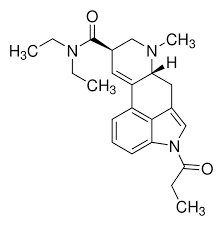
1P-LSD L-tartrate is the tartrate salt form of 1-propionyl-lysergic acid diethylamide (1P-LSD), a semi-synthetic lysergamide and a structural analog of LSD with a propionyl group substitution at the nitrogen-1 position. This purified crystalline salt form enhances solubility and stability compared to the free base form, making it suitable for precise scientific and analytical research. 1P-LSD L-tartrate is primarily used in neuropharmacological studies investigating the pharmacokinetics, metabolism, and receptor-binding properties of psychedelic lysergamides.
Chemical Properties and Specifications
Structural and Molecular Characteristics
-
Chemical Formula: C23H29N3O2 (for base) plus tartaric acid salt
-
Molecular Weight: Approximately 379.5 g/mol (free base)
-
CAS Number: 2349358-81-0
-
IUPAC Name: (6aR,9R)-N,N-diethyl-7-methyl-4-propionyl-4,6,6a,7,8,9-hexahydroindolo[4,3-fg]quinoline-9-carboxamide
-
Synonyms: 1-Propionyl LSD Tartrate, 1P-LSD L-tartrate
Physical Properties and Purity Standards
-
Appearance: A white to off-white crystalline powder exhibiting enhanced chemical stability from the tartrate salt formation.
-
Purity: Typically ≥ 98%, research-grade purity verified through chromatographic and spectrometric analysis.
-
Solubility: Significantly more soluble in water and polar solvents than the free base; additionally soluble in organic solvents like ethanol and methanol.
-
Storage Recommendations: Store in airtight, light-resistant containers in cool, dry conditions, preferably refrigerated (4°C) to maintain optimum chemical integrity.
Pharmacological Profile and Mechanism of Action
Proposed Mechanism of Action
1P-LSD L-tartrate acts primarily through agonism of the serotonin 5-HT2A receptor, the major target mediating psychedelic effects. It is a prodrug that undergoes enzymatic hydrolysis in vivo converting it into LSD, which then interacts with central nervous system serotonin receptors to produce characteristic psychedelic responses. Behavioral studies confirm 1P-LSD induces receptor-mediated effects consistent with established serotonergic hallucinogens.
Research Applications
Used in receptor binding studies, pharmacokinetics, and metabolic investigations, 1P-LSD L-tartrate facilitates precise dosing and improved solubility in experimental protocols. It serves as a molecular probe for structure-activity relationships, receptor pharmacology, and psychedelic metabolism within neuroscience research.
Comparative Analysis with Related Compounds
Comparison with Related Compounds
Compared with LSD, 1P-LSD is structurally distinct due to the propionyl group enhancing metabolic stability and creating a prodrug profile. Relative to other acyl lysergamides like 1B-LSD and 1cP-LSD, 1P-LSD varies in acyl chain length influencing pharmacodynamic and metabolic characteristics. The tartrate salt provides superior formulation advantages over free base powders in solubility and handling.
Advantages for Research
The tartrate salt form yields greater aqueous solubility, facilitating assay development and analytical accuracy. Stability is enhanced for long-term storage and transport. The prodrug property supports detailed studies on metabolic biotransformation to LSD and associated neuropharmacological effects.
Safety and Handling Guidelines
Laboratory Safety
Utilize PPE including gloves, laboratory coat, and safety glasses. Work in well-ventilated or fume hood environments to minimize exposure risk. Avoid ingestion, inhalation, or skin contact.
Disposal and Environmental Considerations
Dispose of waste and contaminated materials as per institutional hazardous chemical protocols. Prevent environmental release through proper containment and neutralization.
Regulatory Status
Classified as a research chemical analog under various controlled substance regulations. It is strictly for scientific research and not for human consumption.
Frequently Asked Questions (FAQs)
-
What benefits does the tartrate salt offer?
-
Enhanced solubility, stability, and ease of handling compared to free base 1P-LSD.
-
How stable is 1P-LSD L-tartrate?
-
Stable under refrigeration in airtight, light-protected storage for extended periods.
-
Is 1P-LSD L-tartrate active on its own?
-
It functions as a prodrug that metabolizes to active LSD in vivo.
-
How is 1P-LSD L-tartrate used in research?
-
In receptor binding, metabolic studies, and formulation assays requiring soluble and stable drugs.
-
What are the storage requirements?
-
Cool, dry, dark environment, preferably refrigerated.
Conclusion
1P-LSD L-tartrate is a high-purity, chemically stable salt form of a propionyl-substituted lysergamide, optimized for psychedelic neuropharmacology research. It enables improved solubility and precise dosing, promoting reproducible investigations of psychedelic mechanisms, receptor effects, and metabolism under stringent safety and regulatory controls.
Reviews
There are no reviews yet.